
- Qualcomm Launches Snapdragon 4 Gen 2 Mobile Platform
- AMD Launches Ryzen PRO 7000 Series Mobile & Desktop Platform
- Intel Launches Sleek Single-Slot Arc Pro A60 Workstation Graphics Card
- NVIDIA Announces Latest Ada Lovelace Additions: GeForce RTX 4060 Ti & RTX 4060
- Maxon Redshift With AMD Radeon GPU Rendering Support Now Available

Social & RSS Feeds
Latest Videos

Latest News
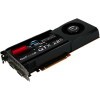
EVGA GeForce GTX 285 SSC Edition

by Rob Williams on March 1, 2009 in Graphics & Displays
When NVIDIA released their GTX 285 card last month, it became the fastest single-GPU card on the market, and that fact still remains. But with our insatiable appetite for more performance, we can’t help but be curious as to how the cards perform when overclocked. So let’s check that out, with the help of EVGA’s SSC Edition.
Page 2 – Test System & Methodology
At Techgage, we strive to make sure our results are as accurate as possible. Our testing is rigorous and time-consuming, but we feel the effort is worth it. In an attempt to leave no question unanswered, this page contains not only our testbed specifications, but also a fully-detailed look at how we conduct our testing.
If there is a bit of information that we’ve omitted, or you wish to offer thoughts or suggest changes, please feel free to shoot us an e-mail or post in our forums.
Test System
The below table lists our testing machine’s hardware, which remains unchanged throughout all GPU testing, minus the graphics card. Each card used for comparison is also listed here, along with the driver version used. Each one of the URLs in this table can be clicked to view the respective review of that product, or if a review doesn’t exist, it will bring you to the product on the manufacturer’s website.
|
Component
|
Model
|
| Processor |
Intel Core i7-965 Extreme Edition – Quad-Core, 3.2GHz, 1.25v
|
| Motherboard |
ASUS Rampage II Extreme – X58-based, 0903 BIOS (12/31/08)
|
| Memory |
OCZ Gold PC3-12800 – DDR3-1333 7-7-7-24-1T, 1.60v
|
| ATI Graphics |
Palit Radeon HD 4870 X2 2GB (Catalyst 8.12 Hotfix) Diamond Radeon HD 4870 1GB (Catalyst 8.12 Hotfix) |
| NVIDIA Graphics |
Zotac GeForce GTX 295 1792MB (GeForce 181.22) EVGA GeForce GTX 285 1GB SSC Edition (GeForce 182.06) Zotac GeForce GTX 285 1GB AMP! (GeForce 181.22) NVIDIA GeForce GTX 285 1GB (GeForce 181.22) Palit GeForce GTX 280 1GB (GeForce 181.22) XFX GeForce GTX 260/216 896MB (GeForce 181.22) |
| Audio |
On-Board Audio
|
| Storage | |
| Power Supply | |
| Chassis | |
| Display | |
| Cooling | |
| Et cetera |
When preparing our testbeds for any type of performance testing, we follow these guidelines:
- General Guidelines
- No power-saving options are enabled in the motherboard’s BIOS.
- Internet is disabled.
- No Virus Scanner or Firewall is installed.
- The OS is kept clean; no scrap files are left in between runs.
- Hard drives affected are defragged with Diskeeper 2008 prior to a fresh benchmarking run.
- Machine has proper airflow and the room temperature is 80°F (27°C) or less.
- Windows Vista Optimizations
- User Account Control (UAC) and screen saver are disabled.
- Windows Defender, Firewall, Security Center, Search, Sidebar and Updates are disabled.
To aide with the goal of keeping accurate and repeatable results, we alter certain services in Windows Vista from starting up at boot. This is due to the fact that these services have the tendency to start up in the background without notice, potentially causing slightly inaccurate results. Disabling “Windows Search” turns off the OS’ indexing which can at times utilize the hard drive and memory more than we’d like.
Game Benchmarks
For graphic card reviews that pit us with a mid-range card or higher, we test at three popular resolutions that span the mid-range to high-end ground, consisting of monitor sizes of 20″ (1680×1050), 24″ (1920×1200) and 30″ (2560×1600).
In an attempt to offer “real-world” results, we do not utilize timedemos in our graphic card reviews, with the exception of Futuremark’s automated 3DMark Vantage. Each game in our test suite is benchmarked manually, with the minimum and average frames-per-second (FPS) captured with the help of FRAPS 2.9.5.
To deliver the best overall results, each title we use is exhaustively explored in order to find the best possible level in terms of intensiveness and replayability. Once a level is chosen, we play through repeatedly to find the best possible route and then in our official benchmarking, we stick to that route as close as possible. Since we are not robots and the game can throw in minor twists with each run, no run can be identical to the pixel.
Each game and setting combination is tested twice, and if there is a discrepancy between the initial results, the testing is repeated until we see results we are confident with.
The six games we currently use for our GPU reviews are listed below, with direct screenshots of the game’s setting screens and explanations of why we chose what we did.
Crysis Warhead
|
1680×1050
|
1920×1200
|
2560×1600
|
  |
  |
  |
Call of Duty: World at War
|
1680×1050
|
1920×1200
|
2560×1600
|
  |
  |
  |
Far Cry 2
|
1680×1050
|
1920×1200
|
2560×1600
|
 |
 |
 |
Left 4 Dead
|
1680×1050
|
1920×1200
|
2560×1600
|
 |
 |
 |
Mirror’s Edge
|
1680×1050
|
1920×1200
|
2560×1600
|
 |
 |
 |
Need for Speed: Undercover
|
1680×1050
|
1920×1200
|
2560×1600
|
 |
 |
 |

Support our efforts! With ad revenue at an all-time low for written websites, we're relying more than ever on reader support to help us continue putting so much effort into this type of content. You can support us by becoming a Patron, or by using our Amazon shopping affiliate links listed through our articles. Thanks for your support!

Rob Williams
Rob founded Techgage in 2005 to be an 'Advocate of the consumer', focusing on fair reviews and keeping people apprised of news in the tech world. Catering to both enthusiasts and businesses alike; from desktop gaming to professional workstations, and all the supporting software.


