
- Qualcomm Launches Snapdragon 4 Gen 2 Mobile Platform
- AMD Launches Ryzen PRO 7000 Series Mobile & Desktop Platform
- Intel Launches Sleek Single-Slot Arc Pro A60 Workstation Graphics Card
- NVIDIA Announces Latest Ada Lovelace Additions: GeForce RTX 4060 Ti & RTX 4060
- Maxon Redshift With AMD Radeon GPU Rendering Support Now Available

Social & RSS Feeds
Latest Videos

Latest News
Overclocking Intel’s Core i5-750 & i7-870

by Rob Williams on September 10, 2009 in Processors
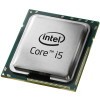
We found out earlier this week that Intel’s Lynnfield-based processors are fast, but who said that cranking the clocks to make them even faster was a bad idea? In this article, we take both the Core i5-750 and i7-870 for an overclocking joyride, and the stable overclocks we were able to achieve is nothing short of impressive.
Page 3 – Overclocking the Core i7-870
With the overclock we saw on the Core i5-750, it’s pretty much impossible for the Core i7-870 to produce something quite as impressive. After all, even if it hits 4.0GHz, it still costs about 2.75x as much, so it’s a bit more difficult to exert the energy to drop your jaw. But, one thing the i7-870 does have going for it is HyperThreading, and as seen in our recent tests, there are many scenarios that excel on such a processor, especially 3D rendering.
As a result of HyperThreading, a processor is able to theoretically juggle twice as many tasks at a time (HyperThreaded processors will show double the number of cores (threads) to your OS… in the case of a Quad-Core, it will show eight). While that offers extreme performance in some cases, a side-effect is greater temperatures. So, it’s imperative that you have a good-quality CPU cooler when overclocking the Core i7-860 or i7-870 (or any of the previously-launched Core i7’s for that matter).
The process of overclocking the i7-870 was pretty much the same as the i5-750. We first tried to achieve a high overclock using stock voltages, and thanks to the slightly higher multiplier here, we were able to get by with using a lower bus speed (173MHz vs. 155MHz). Not only that, but we managed to achieve a slightly higher overclock, as well… 3.72GHz!

(Stock Voltages – Click for stability report)
Once again, as you can see by the CPU voltage in our CPU-Z report above, we didn’t have to touch anything. With Turbo taken into consideration, we essentially gained 520MHz from this overclock. While we gained a 30% clock boost on the i5-750, hitting 3.72GHz here means a 16.4% boost. Is that reflected in the raw performance?
|
Intel Core i7-870 2.93GHz (Overclock: 3.72GHz w/ Turbo)
|
|||
|
Benchmark
|
Stock
|
Overclock
|
Increase
|
| Autodesk 3ds Max 2009 Dog Render Bathroom Render |
190 s
403 s |
160 s
346 s |
18.75%
16.47% |
| Cinebench R10 Single-Thread Multi-Thread |
4497
18440 |
5230
21217 |
16.30%
15.06% |
| POV-Ray 3.7 Single-Thread Multi-Thread |
858.60
3940.24 |
907.69
4593.22 |
5.71%
16.57% |
| Adobe Lightroom 2.0 Convert 100 RAW to JPEG |
95.44 s
|
88.27 s
|
8.12%
|
| TMPGEnc Xpress HD Video Encode Mobile Video Encode |
198 s 106 s |
166 s 91 s |
19.27% 16.48% |
| ProShow Gold HD Video Encode DVD Video Encode |
236 s 63 s |
211 s 55 s |
11.84% 14.55% |
| Sandra Arithmetic Dhrystone SSE4.2 Whetstone SSE3 |
77686 MIPS 61065 MFLOPS |
90456 MIPS 70912 MFLOPS |
16.43% 16.13% |
| Sandra Multi-Media Int x16 Float x8 Double x4 |
161.32 MPixel/s 124.84 MPixel/s 68.78 MPixel/s |
187.70 MPixel/s 145.28 MPixel/s 79.97 MPixel/s |
16.35% 16.37% 16.27% |
| Sandra Cryptography AES256 SHA256 |
577 534 |
672 622 |
16.46% 16.48% |
| Microsoft Excel Monte Carlo Big Number Crunch |
13.743 s 4.149 s |
11.794 s 3.557 s |
16.53% 16.64% |
| 3DMark Vantage CPU Score |
19623 |
22787 |
16.12% |
Surprisingly, unlike the i5-750, whose overclocked performance didn’t quite match its gain in frequency, the i7-870 hits almost every test right on the mark. In the case of our HD encode test with TMPGEnc Xpress, we actually saw a greater than 16% gain. On the opposite side of the coin, we didn’t quite hit 16% with Adobe Lightroom, but the gain exhibited is still nice to see.
I mentioned above that for HyperThreaded processors, a good-quality CPU cooler is imperative to retain stability on your overclocks. Well, that advice is amplified when we’re dealing with extra voltage. While the above overclock is stable on Intel’s stock cooler, the one below is not, so please use caution if you choose to crank up the voltage and go for gold.

(1.40v CPU, 1.40v Bus – Click for stability report)
Once again, with 1.40v being applied to the CPU, and 1.40v also to the QPI/Vtt (Bus), we hit 4.1GHz, and with the help of our Thermalright MUX-120 CPU cooler, we retained full stability in our battery of tests. 4.1GHz is an impressive clock, especially when you consider that the processor is one of the fastest on the market to begin with. Which such an overclock, this processor would beat out the Core i7-975 Extreme Edition at its stock clocks easily. Plus, this option is $450 cheaper. Not bad, eh?
This concludes our overclocking report for Intel’s new Lynnfield processors, and I hope you’ve enjoyed reading. This is the first such article we’ve written, so as always, we’re up for comments and suggestions. If you liked what you saw here, let us know. Likewise, if you disagree with how we tested, or you wanted even more information, bring it on! The comment thread URL is linked below, and you are not required to sign up on our forums to post a comment.
Discuss this article in our forums!
Have a comment you wish to make on this article? Recommendations? Criticism? Feel free to head over to our related thread and put your words to our virtual paper! There is no requirement to register in order to respond to these threads, but it sure doesn’t hurt!

Support our efforts! With ad revenue at an all-time low for written websites, we're relying more than ever on reader support to help us continue putting so much effort into this type of content. You can support us by becoming a Patron, or by using our Amazon shopping affiliate links listed through our articles. Thanks for your support!

Rob Williams
Rob founded Techgage in 2005 to be an 'Advocate of the consumer', focusing on fair reviews and keeping people apprised of news in the tech world. Catering to both enthusiasts and businesses alike; from desktop gaming to professional workstations, and all the supporting software.


