Date: April 3, 2009 - Author: Rob Williams
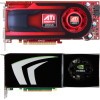
It's not often we get to take two brand-new GPUs and pit them against each other in one launch article, but that's what we're doing with ATI's HD 4890 and NVIDIA's GTX 275. Both cards are priced at $249, and both also happen to offer great performance and insane overclocking-ability. So coupled with those and other factors, who comes out on top?
The past few weeks for graphics cards have been quite interesting, for a couple of different reasons. With the Game Developers Conference taking place just last week, we learned from both ATI and NVIDIA of what's in store for the near-future, and also what's happening now. Both companies had a lot to talk about at the show, and we'll be discussing some of the more interesting points here.
Before we dive too deep into things, let's tackle the obvious question of why we're reviewing two new products from fierce competitors on the same day. As it usually happens, one company will release a new product and the other will follow-up weeks later. Not so this time. Although ATI has had their April 2nd embargo date set in stone for a little while, NVIDIA decided just last week to follow-suit, and as a result, we're going to be taking a look at both cards in this single article.
If either card was in a different price-range or category, a rare occurrence such as this would not have happened. The reason NVIDIA bumped up their date is because the GTX 275 is designed to compete with the HD 4890 head-on, from both a performance and price perspective. Fair enough. What's a little strange about both of these cards, though, is that it's not the cards themselves that are too interesting, but rather the current technologies surrounding them. NVIDIA continues to tout their PhysX physics acceleration, while ATI continue to push DirectX 10.1. We have a lot to talk about here, so let's get right to it.
Both of today's graphics cards fall into the mid-range category, but each settle in at a slightly different place in the respective company's line-up. For example, ATI's HD 4890 becomes the company's fastest single-GPU offering, and with 100MHz added to the Core clock over the HD 4870, we should be seeing some noticeable differences in our results today.
NVIDIA's GTX 275, on the other hand, becomes the second-lowest offering in their G200 chip series, and sits above the GTX 260/216 and below the GTX 285. Some interpretations of this product is that it was a result of NVIDIA's quick action to compete with ATI, since the product isn't that different from the other cards we just mentioned, but while the Core clock isn't that much lower, the Shader clock is 72MHz lower, so that should noticeably help differentiate itself from the GTX 285.
One confusing aspect of these cards up to this point has been the pricing. Both ATI and NVIDIA have been keeping as quiet as possible, and from what I've heard from certain GPU vendors, NVIDIA changed their mind more than once on their final pricing - possibly since they knew ATI was aiming for $249. ATI themselves haven't changed their final pricing too much, although they did add a last-minute tidbit saying that launch cards should be carrying a mail-in rebate worth $20, which can bring things down to $229.
At last check, NVIDIA says the expected pricing of their card will be $249, which means it will average about ~$50 more expensive than most GTX 260/216s, and ~$100 lower than their fastest single-GPU offering, the GTX 285. For ATI, their HD 4890 will retail for about ~$50 over their HD 4870, and ~$150 less than their dual-GPU HD 4870 X2 card. ATI says that their card will have immediate availability, while NVIDIA expects their cards to be readily available on April 14.
Over the past week, we've been briefed by both ATI and NVIDIA, so we'll be taking a look at what's new from both companies in some depth on the following two pages.
When ATI first released their HD 4000 series last summer, people all over were stunned. For a company to go through such a rough patch (we don't need to bring all that up again), the company really struck back with some stellar offerings - even putting NVIDIA's own GT200 launch cards (launched a month earlier) to shame. Between then and now, though, the company hasn't followed-up with any other high-end cards aside from the dual-GPU X2 card. The HD 4890 is their answer to that issue.
Like the HD 4870, this card still offers 1GB of GDDR5, and on top of faster clock speeds, the GPU core itself has gone through some modification. While the HD 4870 utilized an RV770 core, the HD 4890's tweaked version becomes the RV790. Although it's pretty similar to the RV770 architecturally, and built on the same process node, ATI made various changes that allowed much higher clocks, and hopefully lower temps. Some changes included a re-timing of key components to fix up any slow paths. These and others are what opened the path to higher clock speeds, while also moving some components around to achieve better power efficiency.

Because of these changes, ATI managed to add between 100 - 150MHz to the Core clock, while dropping the idle power consumption by 30W. On the other side of the coin, thanks to these higher frequencies, the load power draw has increased by 30W. As you can see below, while the HD 4870 had clock speeds of 750MHz on the Core and 900MHz Memory, the HD 4890 bumps both to 850MHz Core and 975MHz memory.
Model |
Core MHz |
Mem MHz |
Memory |
Bus Width |
Processors |
| Radeon HD 4870 X2 | 750 |
900 |
1024MB x 2 |
256-bit |
800 x 2 |
| Radeon HD 4850 X2 | 625 |
993 |
1024MB x 2 |
256-bit |
800 x 2 |
| Radeon HD 4890 | 850 - 900 |
975 |
1GB |
256-bit |
800 |
| Radeon HD 4870 | 750 |
900 |
512 - 1024MB |
256-bit |
800 |
| Radeon HD 4850 | 625 |
993 |
512 - 1024MB |
256-bit |
800 |
| Radeon HD 4830 | 575 |
900 |
256 - 512MB |
256-bit |
640 |
| Radeon HD 4670 | 750 |
900 - 1100 |
512 - 1024MB |
128-bit |
320 |
| Radeon HD 4650 | 600 |
400 - 500 |
512 - 1024MB |
128-bit |
320 |
| Radeon HD 4550 | 600 |
800 |
256 - 512MB |
64-bit |
80 |
| Radeon HD 4350 | 575 |
500 |
512MB |
64-bit |
80 |
To help either make things a little more confusing or to give consumers more choice, ATI will be offering to manufacturers both a stock-clocked chip, and also an "OC" part, which increases the Core clock to 900MHz, or 150MHz above the HD 4870. Coupled with those clock bumps and other architectural enhancements, it's ATI's hope that the HD 4890 breathes new life into what's becoming an abundance of dull product launches.
During the conference call last week, ATI made sure to point out that while the competition continues to release re-hashed parts, they continue to innovate. In November of 2007, they note, they released the world's first 55nm part, and also the first DirectX 10.1 part. In June of 2008, they followed up with a new architecture and delivered the first GDDR5 card, and also the first card to offer over 1TFLOP of computational power.
Finally, in May of this year, the company will release their HD 4700 series which will become the first GPUs on the market to be built on a 40nm process. In that regard, they're even ahead of the likes of AMD and Intel. This card will also offer a 3rd DirectX 10.1 generation and 2nd generation GDDR5. What either of those mean, I have no idea.
DirectX 10.1 is one feature they talked about a fair bit on last week's call, and it's no surprise given that NVIDIA never jumped on that bandwagon for some reason. They pointed out such titles as S.T.A.L.K.E.R.: Clear Sky (which can eat me), Sega's Stormrise, Tom Clancy's H.A.W.X and Battle Forge. They also mentioned that the Unigine game engine utilizes DX 10.1 as well.
Another feature that ATI as well as NVIDIA talked a lot about was Ambient Occlusion, a technique used to add more realistic shadows to certain objects in gaming. Although it can have varying ways of being executed, the common goal of AO is deliver accurate shadows to objects that may otherwise look incorrect due to lighting from global illumination.
Essentially, scenes and objects should look more realistic. One particular example NVIDIA gave was of Half-Life 2. Throughout the game, there are phone booths, and while they look as though they are pressed up against the wall, AO shows that they are not, thanks to the more realistic shadow effects. Because AO bases itself off of various lightning sources, there is going to be a performance hit, and it's expected to range in the 30% area.
Aside from Ambient Occlusion, ATI talked more about their Stream technology, which is their solution to General Purpose computing on the GPU (GPGPU). Although the company is seemingly far behind NVIDIA in this respect, they gave examples of where they see their technology being used, such as media-related applications, graphic design, operating system functions, special effects, AI and of course, physics.
Being a huge supporter of OpenCL, ATI proved it with a demo with Havoc at the GDC that showed cloth effects being handled by the GPU. This technique is similar to PhysX, but we're obviously in the very early stages where OpenCL and Havoc are concerned. It does give us hope to see a proper PhysX competitor in the near-future though.
Finally, ATI wrapped up their call with talks about Windows 7. Simply put, their dedication to the new OS is great. So great in fact, that they have worked with Microsoft to include their graphics drivers right on the Windows 7 install DVD. Although we can likely expect the same thing from NVIDIA, I didn't receive an answer when I asked them about it.
As you can see, ATI had a lot more to talk about during their call last week than just the HD 4890. No complaints here... it's all looking great as far as I'm concerned. So how does NVIDIA stack up? The next page tells all.
Like ATI, NVIDIA has had a busy few weeks, so before we look at the company's recent announcements, let's first take a look at the important part of the article, the GTX 275. Introduced as an in-between to the GTX 260/216 and GTX 285, the GTX 275 offers fast clocks at the typical mid-range price of ~$249. This card is of course designed to compete directly with ATI's HD 4890, so instead of speculating which will come out on top, we'll let the results on the following pages speak for themselves.
Interestingly, the GTX 275 doesn't fall too far below the much-more expensive GTX 285. While the GTX 285 has a Core clock of 648MHz and Shader clock of 1476MHz, the GTX 275's has its clocks dropped to 633MHz Core and 1404MHz Shader. What does this say? Well, it looks like NVIDIA really wanted to compete, and didn't mind taking away from GTX 285 sales.
There's potential here for an obvious winner: gamers. Although the clocks on the GTX 275 are noticeably lower than the GTX 285, we've come to expect quite a bit in way of overclocking from NVIDIA in the past, and I have doubts that every-single launch GTX 275 wouldn't be able to hit GTX 285 speeds. That makes the GTX 275 just a little more desirable - not to mention a great value.

Like the HD 4890, NVIDIA has said that their card will retail for $249, and so far, we can see that we are coming close, with Newegg's listings showing $259.99 (although none are in stock). Like NVIDIA's other single-GPU cards, this one uses two PCI-E 6-pin connectors and has a max board power TDP of 219W. In addition, the memory configuration is slightly tweaked from the GTX 285. Instead of a 512-bit memory bus and 1GB of GDDR3, we see a 448-bit bus and 896MB of GDDR3.
Model |
Core MHz |
Shader MHz |
Mem MHz |
Memory |
Bus Width |
Processors |
| GeForce GTX 295 | 576 |
1242 |
1000 |
1792MB |
448-bit |
480 |
| GeForce GTX 285 | 648 |
1476 |
1242 |
1GB |
512-bit |
240 |
| GeForce GTX 275 | 633 |
1404 |
1134 |
896MB |
448-bit |
240 |
| GeForce GTX 280 | 602 |
1296 |
1107 |
1GB |
512-bit |
240 |
| GeForce GTX 260 | 576 |
1242 |
999 |
896MB |
448-bit |
216 |
| GeForce GTS 250 | 738 |
1836 |
1100 |
1GB |
256-bit |
128 |
| GeForce 9800 GX2 | 600 |
1500 |
1000 |
1GB |
512-bit |
256 |
| GeForce 9800 GTX+ | 738 |
1836 |
1100 |
512MB |
256-bit |
128 |
| GeForce 9800 GTX | 675 |
1688 |
1100 |
512MB |
256-bit |
128 |
| GeForce 9800 GT | 600 |
1500 |
900 |
512MB |
256-bit |
112 |
| GeForce 9600 GT | 650 |
1625 |
900 |
512MB |
256-bit |
64 |
| GeForce 9600 GSO | 550 |
1375 |
800 |
384MB |
192-bit |
96 |
I've pretty well said everything that can be said about the card, so let's move right along into what else NVIDIA has been up to. As mentioned in our news last week, the company unveiled their APEX technology during the Game Developers Conference, and though I'm not a developer, much less a game developer, this is one piece of technology that does seem to hold real potential, at least, as far as PhysX is concerned.
Although our mention in that post was quite brief, APEX is actually pretty cool in both its design and goals. NVIDIA recognized the fact that most game titles are built with far more artists than coders (no surprise), so APEX makes it easier for those artists to get become a larger part of the development process. As the example in the news post showed, the developer could essentially take a tree, make it explode, and tweak it as necessary in order to match their vision. It's an interesting tool, so we'll just have to sit back and wait to see how successful it will be.
During NVIDIA's own conference call, Ambient Occlusion was again a topic of definite interest. Given that both ATI and NVIDIA spoke so highly of it, it's bound to catch on. Although both manufacturer's cards are said to offer near-identical results, NVIDIA has an added benefit of being able to add support to games that don't natively offer it. Their prime example was Half-Life 2, and as a five-year-old game, it's no surprise that it's not supported. Thanks to an added control inside of the NVIDIA Control Center, though, you can enable it in any title and hope for the best.
Some examples of forced Ambient Occlusion are shown in these screenshots:
The topic of PhysX is one that's never far from NVIDIA's mouth, and the call last week was further proof of that. Exciting things are happening with the technology, and developers continue to pile on and claim support. Not too much in way of actual game titles were announced, but the company did toot their own horn for there being over 100+ games currently on the market to support it (including consoles).
This year, there are a few noteworthy games due to come out that will support the technology, from MKZ, a first-person shooter, to Star Tales, a game I'm not too familiar with, but does a good job of making me wonder about the potential of breast physics. In addition to future titles supporting the tech, NVIDIA also pointed out that patches exist for games like Sacred 2 to open up the support (and the results look quite good, actually).
Past PhysX, they talked a bit more about CUDA, and what applications are now available. Aside from Badaboom, which has become a standard in the discussion of CUDA, they also mentioned MotionDSP's vReveal, a program we talked about briefly in our news last week. This application aims to take your shoddy-looking videos and improve them, a la CSI-style. It holds real promise, but as others have learned, it also has a few serious limitations.
I could write more about what NVIDIA discussed and showed off, but really, this article is about two graphics cards, so I'll wrap this up. The last notable thing NVIDIA unveiled was their third power pack, which is available right now. In this one, you'll be able to download the Sacred 2 PhysX patch, a benchmark demo of Star Tales, a PhysX screensaver (complete with source code), a trial of vReveal and a GPU-accelerated SETI@home client.
Both ATI and NVIDIA have been up to lots over the course of the past few weeks, and boy, has it made more work for editors! So finally, let's get to the real good stuff... our test results. On the next page, we have our test rig and methodology, and afterwards, we'll get right into Call of Duty: World at War.
At Techgage, we strive to make sure our results are as accurate as possible. Our testing is rigorous and time-consuming, but we feel the effort is worth it. In an attempt to leave no question unanswered, this page contains not only our testbed specifications, but also a fully-detailed look at how we conduct our testing.
If there is a bit of information that we've omitted, or you wish to offer thoughts or suggest changes, please feel free to shoot us an e-mail or post in our forums.
The below table lists our testing machine's hardware, which remains unchanged throughout all GPU testing, minus the graphics card. Each card used for comparison is also listed here, along with the driver version used. Each one of the URLs in this table can be clicked to view the respective review of that product, or if a review doesn't exist, it will bring you to the product on the manufacturer's website.
Component |
Model |
| Processor | Intel Core i7-965 Extreme Edition - Quad-Core, 3.2GHz, 1.25v |
| Motherboard | ASUS Rampage II Extreme - X58-based, 0903 BIOS (12/31/08) |
| Memory | OCZ Gold PC3-12800 - DDR3-1333 7-7-7-24-1T, 1.60v |
| Graphics |
Palit Radeon HD 4870 X2 2GB (Catalyst 8.12 Hotfix) Sapphire Radeon HD 4890 1GB (Catalyst March 25, 2009) Diamond Radeon HD 4870 1GB (Catalyst 8.12 Hotfix) Sapphire Radeon HD 4830 512MB (Catalyst 9.2) Sapphire Radeon HD 4670 512MB (Catalyst 9.2) |
| NVIDIA Graphics |
Zotac GeForce GTX 295 1792MB (GeForce 181.22) EVGA GeForce GTX 285 1GB (GeForce 182.06) NVIDIA GeForce GTX 275 896MB (GeForce 185.63) Palit GeForce GTX 280 1GB (GeForce 181.22) XFX GeForce GTX 260/216 896MB (GeForce 181.22) EVGA GeForce GTS 250 1GB (GeForce 182.08) ASUS GeForce 9800 GTX+ 512MB (GeForce 182.08) |
| Audio | On-Board Audio |
| Storage | |
| Power Supply | |
| Chassis | |
| Display | |
| Cooling | |
| Et cetera |
When preparing our testbeds for any type of performance testing, we follow these guidelines:
To aide with the goal of keeping accurate and repeatable results, we alter certain services in Windows Vista from starting up at boot. This is due to the fact that these services have the tendency to start up in the background without notice, potentially causing slightly inaccurate results. Disabling "Windows Search" turns off the OS' indexing which can at times utilize the hard drive and memory more than we'd like.
For graphic card reviews that pit us with a mid-range card or higher, we test at three popular resolutions that span the mid-range to high-end ground, consisting of monitor sizes of 20" (1680x1050), 24" (1920x1200) and 30" (2560x1600).
In an attempt to offer "real-world" results, we do not utilize timedemos in our graphic card reviews, with the exception of Futuremark's automated 3DMark Vantage. Each game in our test suite is benchmarked manually, with the minimum and average frames-per-second (FPS) captured with the help of FRAPS 2.9.8.
To deliver the best overall results, each title we use is exhaustively explored in order to find the best possible level in terms of intensiveness and replayability. Once a level is chosen, we play through repeatedly to find the best possible route and then in our official benchmarking, we stick to that route as close as possible. Since we are not robots and the game can throw in minor twists with each run, no run can be identical to the pixel.
Each game and setting combination is tested twice, and if there is a discrepancy between the initial results, the testing is repeated until we see results we are confident with.
The six games we currently use for our GPU reviews are listed below, with direct screenshots of the game's setting screens and explanations of why we chose what we did.
1680x1050 |
1920x1200 |
2560x1600 |
1680x1050 |
1920x1200 |
2560x1600 |
1680x1050 |
1920x1200 |
2560x1600 |
1680x1050 |
1920x1200 |
2560x1600 |
1680x1050 |
1920x1200 |
2560x1600 |
1680x1050 |
1920x1200 |
2560x1600 |
While some popular game franchises are struggling to keep themselves healthy, Call of Duty doesn't have much to worry about. This is Treyarch's third go at a game in the series, and a first for one that's featured on the PC. All worries leading up to this title were all for naught, though, as Treyarch delivered on all promises.
To help keep things fresh, CoD: World at War focuses on battles not exhaustively explored in previous WWII-inspired games. These include battles which take place in the Pacific region, Russia and Berlin, and variety is definitely something this game pulls off well, so it's unlikely you'll be off your toes until the end of the game.
For our testing, we use a level called "Relentless", as it's easily one of the most intensive levels in the game. It features tanks, a large forest environment and even a few explosions. This level depicts the Battle of Peleliu, where American soldiers advance to capture an airstrip from the Japanese. It's a level that's both exciting to play and one that can bring even high-end systems to their knees.


At each one of our resolutions, NVIDIA manages to come out on top, and also beats out what was NVIDIA's top-end card last summer, the GTX 280. The per-vendor performance differences are far more impressive on the ATI side of things though, where we can see the HD 4890 sky-rocket up past the HD 4870 1GB.
Graphics Card |
Best Playable |
Avg. FPS |
NVIDIA GTX 295 1792MB x 2 |
2560x1600 - Max Detail, 8xAA |
90.283 FPS |
NVIDIA GTX 285 1GB x 2 |
2560x1600 - Max Detail, 8xAA |
63.401 FPS |
Zotac GTX 295 1792MB |
2560x1600 - Max Detail, 8xAA |
52.461 FPS |
Palit HD 4870 X2 2GB |
2560x1600 - Max Detail, 8xAA |
37.825 FPS |
NVIDIA GTX 285 1GB |
2560x1600 - Max Detail, 4xAA |
41.510 FPS |
NVIDIA GTX 275 896MB |
2560x1600 - Max Detail, 4xAA |
39.998 FPS |
Palit GTX 280 1GB |
2560x1600 - Max Detail, 4xAA |
38.192 FPS |
Sapphire HD 4890 1GB |
2560x1600 - Max Detail, 4xAA |
34.094 FPS |
XFX GTX 260/216 896MB |
2560x1600 - Max Detail, 4xAA |
32.723 FPS |
ASUS GeForce 9800 GTX+ 512MB |
2560x1600 - Max Detail, 0xAA |
34.596 FPS |
NVIDIA GeForce GTS 250 1GB |
2560x1600 - Max Detail, 0xAA |
34.192 FPS |
Diamond HD 4870 1GB |
2560x1600 - Max Detail, 0xAA |
30.372 FPS |
Sapphire HD 4830 512MB |
1920x1200 - Max Detail, 0xAA |
40.157 FPS |
Sapphire HD 4670 512MB |
1920x1200 - Max Detail, 0xAA |
28.101 FPS |
Since both of the cards here performed well at 2560x1600, our best-playable settings mimic what's seen in the final graph above. NVIDIA's card was noticeably better, but nothing was lacking where the HD 4890 was concerned.
As PC enthusiasts, we tend to be drawn to games that offer spectacular graphics... titles that help reaffirm your belief that shelling out lots of cash for that high-end monitor and PC was well worth it. But it's rare when a game comes along that is so visually-demanding, it's unable to run fully maxed out on even the highest-end systems on the market. In the case of the original Crysis, it's easy to see that's what Crytek was going for.
Funny enough, even though Crysis was released close to a year ago, the game today still has difficulty running at 2560x1600 with full detail settings - and that's even with overlooking the use of anti-aliasing! Luckily, Warhead is better optimized and will run smoother on almost any GPU, despite looking just as gorgeous as its predecessor, as you can see in the screenshot below.
The game includes four basic profiles to help you adjust the settings based on how good your system is. These include Entry, Mainstream, Gamer and Enthusiast - the latter of which is for the biggest of systems out there, unless you have a sweet graphics card and are only running 1680x1050. We run our tests at the Gamer setting as it's very demanding on any current GPU and is a proper baseline of the level of detail that hardcore gamers would demand from the game.


Although ATI's offerings tend to run Crysis better than NVIDIA, the extra juice of the GTX 275 once again put it ahead by a fair margin. But despite that, both cards share one similar trait... neither can handle the game at 2560x1600 on the gamer profile. So let's see how things change when the Mainstream profile is used instead:
Graphics Card |
Best Playable |
Avg. FPS |
NVIDIA GTX 295 1792MB x 2 |
2560x1600 - Enthusiast, 0xAA |
42.507 FPS |
NVIDIA GTX 285 1GB x 2 |
2560x1600 - Gamer, 0xAA |
45.835 FPS |
Zotac GTX 295 1792MB |
2560x1600 - Gamer, 0xAA |
37.97 FPS |
NVIDIA GTX 285 1GB |
2560x1600 - Mainstream, 0xAA |
51.283 FPS |
NVIDIA GTX 275 896MB |
2560x1600 - Mainstream, 0xAA |
48.873 FPS |
Palit GTX 280 1GB |
2560x1600 - Mainstream, 0xAA |
46.912 FPS |
XFX GTX 260/216 896MB |
2560x1600 - Mainstream, 0xAA |
40.750 FPS |
Sapphire HD 4890 1GB |
2560x1600 - Mainstream, 0xAA |
37.795 FPS |
ASUS GeForce 9800 GTX+ 512MB |
2560x1600 - Mainstream, 0xAA |
34.735 FPS |
NVIDIA GeForce GTS 250 1GB |
2560x1600 - Mainstream, 0xAA |
34.327 FPS |
Diamond HD 4870 1GB |
2560x1600 - Mainstream, 0xAA |
33.849 FPS |
Palit HD 4870 X2 2GB |
2560x1600 - Mainstream, 0xAA |
30.670 FPS |
Sapphire HD 4830 512MB |
1920x1200 - Mainstream, 0xAA |
37.051 FPS |
Sapphire HD 4670 512MB |
1920x1200 - Mainstream, 0xAA |
25.175 FPS |
Here, the GTX 275 shines even brighter, not only surpassing the GTX 280 by a few extra FPS, but also coming close to the GTX 285. The HD 4890 also further proves its superiority over the HD 4870, but falls about 11 FPS short of the GTX 275.
Sequels are common, and three of our six games used here prove it. But what's different with Far Cry 2, though, is that while the other sequels here don't throw you for a loop when you first load it up and generally give you what you'd expect to see, this game does the absolute opposite. We knew for months that Far Cry 2 wasn't going to be a direct continuation of the original, but for the most part, this game could have gone by any other name and no one would even make a connection. Luckily for Ubisoft, though, the game can still be great fun.
Like the original, this game is a first-person shooter that offers open-ended gameplay, similar to S.T.A.L.K.E.R. You'll be able to roam the huge map (50km^2) of a central African state which will mostly be traversed by vehicle, as walking even 2% in any direction gets very tedious after a while. This game is a perfect GPU benchmark simply because the graphics are better than the average, with huge draw distances, realistic nature and even a slew of animals to pass by (and kill if you are evil enough).
Our run through takes place in the Shwasana region, and consists of leaving a small hut and walking towards four people prepared to kill me for no apparent reason (except that this is a game). After the opponents are eliminated, a walk along the dirt road continues for another twenty seconds until we reach a small hut with supplies.


We're running into a recurring theme here, but ATI's HD 4890 comes closer to the GTX 275 in this title than the other games we've tested so far, and actually passes it in our 2560x1600 test. Neither card has the oomph required to deliver fully enjoyable gameplay at that top resolution though, so let's get rid of AA and see how things stand.
Graphics Card |
Best Playable |
Avg. FPS |
NVIDIA GTX 285 1GB x 2 |
2560x1600 - Max Detail, 8xAA |
46.502 FPS |
NVIDIA GTX 295 1792MB x 2 |
2560x1600 - Max Detail, 4xAA |
88.608 FPS |
Zotac GTX 295 1792MB |
2560x1600 - Max Detail, 4xAA |
55.951 FPS |
Palit HD 4870 X2 2GB |
2560x1600 - Max Detail, 4xAA |
43.600 FPS |
NVIDIA GTX 285 1GB |
2560x1600 - Max Detail, 4xAA |
37.785 FPS |
Sapphire HD 4890 1GB |
2560x1600 - Max Detail, 0xAA |
48.568 FPS |
NVIDIA GTX 275 896MB |
2560x1600 - Max Detail, 0xAA |
47.509 FPS |
Palit GTX 280 1GB |
2560x1600 - Max Detail, 0xAA |
43.460 FPS |
Diamond HD 4870 1GB |
2560x1600 - Max Detail, 0xAA |
41.777 FPS |
XFX GTX 260/216 896MB |
2560x1600 - Max Detail, 0xAA |
38.527 FPS |
ASUS GeForce 9800 GTX+ 512MB |
2560x1600 - Max Detail, 0xAA |
34.735 FPS |
NVIDIA GeForce GTS 250 1GB |
2560x1600 - Max Detail, 0xAA |
31.521 FPS |
Sapphire HD 4830 512MB |
1920x1200 - Max Detail, 0xAA |
38.323 FPS |
Sapphire HD 4670 512MB |
1920x1200 - Max Detail, 0xAA |
28.819 FPS |
With anti-aliasing turned off, things improve a great deal for both cards. Whereas with AA, things were a bit sluggish, removing it bursts new life into the game. Once again, ATI's card managed to creep up past NVIDIA's in this test.
Not too many game publishers can brag about having such a great track record like Valve can. None of their major game releases have ever been released to anything but praise, which goes to show that not rushing to release a game to please investors can make a huge difference. Take Half-Life 2, Team Fortress 2 and Portal, for example.
Left 4 Dead is one game I didn't take seriously up until its launch. After playing it though, my opinions changed drastically, and even as I type this, I feel like saving the document and going to play. But, I'm also scared of Zombies, so continue writing I shall. Like Dead Space, this game is a survival shooter, but unlike that game, this title focuses completely on co-op. For the most part, the game is dulled in single player, but team up with three of your friends and let the laughs and excitement begin.
The portion of the level we use for testing is contained within the No Mercy campaign. The ultimate goal in the entire campaign is to make it to the top of a hospital in order to be picked up and brought off to safety. Our run through takes place in the final part of the the campaign, which leads up towards the roof tops. If one thing can be said about this title, it's that causing a Boomer to explode (as seen in the above screenshot) proves to be one of the most satisfying things to do in any game I've played in a while.


Continuing an obvious theme, NVIDIA's card comes out on top again, although with this particular title, the differences are moot. Aside from the absolute lowest-end offerings, all of our GPUs were able to handle this game at 2560x1600 with 4xAA, which is impressive from many different standpoints.
Graphics Card |
Best Playable |
Avg. FPS |
NVIDIA GTX 295 1792MB x 2 |
2560x1600 - Max Detail, 8xMSAA |
117.701 FPS |
Palit HD 4870 X2 2GB |
2560x1600 - Max Detail, 8xMSAA |
117.039 FPS |
NVIDIA GTX 285 1GB x 2 |
2560x1600 - Max Detail, 8xMSAA |
109.491 FPS |
Zotac GTX 295 1792MB |
2560x1600 - Max Detail, 8xMSAA |
102.422 FPS |
NVIDIA GTX 275 896MB |
2560x1600 - Max Detail, 8xMSAA |
79.651 FPS |
Sapphire HD 4890 1GB |
2560x1600 - Max Detail, 8xMSAA |
73.803 FPS |
NVIDIA GTX 285 1GB |
2560x1600 - Max Detail, 8xMSAA |
72.072 FPS |
Palit GTX 280 1GB |
2560x1600 - Max Detail, 8xMSAA |
66.775 FPS |
Diamond HD 4870 1GB |
2560x1600 - Max Detail, 8xMSAA |
66.294 FPS |
XFX GTX 260/216 896MB |
2560x1600 - Max Detail, 8xMSAA |
56.608 FPS |
NVIDIA GeForce GTS 250 1GB |
2560x1600 - Max Detail, 8xMSAA |
47.142 FPS |
ASUS GeForce 9800 GTX+ 512MB |
2560x1600 - Max Detail, 4xMSAA |
62.571 FPS |
Sapphire HD 4830 512MB |
2560x1600 - Max Detail, 4xMSAA |
48.612 FPS |
Sapphire HD 4670 512MB |
2560x1600 - Max Detail, 0xAA |
39.770 FPS |
Some of our results in the graphs above suggest that some improvements have been made to NVIDIA's drivers since we last benchmarked their highest-end cards, as the GTX 275 creeps past the GTX 285 in some cases. If we crank the Anti-Aliasing to 8xMSAA, nothing changes - the GTX 275 once again topples the GTX 285. In fact, so does the HD 4890! Though 8xMSAA is hardly that important, it's nice on the ego to enable it and still see incredible framerates.
What was the last first-person game on the PC to truly blow you away, or offer some unique gameplay experience? New first-person shooters come out quite often, and while some show off some new features and gameplay twists, few of them truly regenerate the genre like we'd hope. Mirror's Edge is a title that strived to do just that, and for the most part, I'd have to say they've done a great job.
First and foremost, Mirror's Edge isn't so much a first-person shooter as it is a first-person adventure game, because for the most part, combat isn't the main focus. Throughout some of the few levels I played through, at times there could be a full ten-minute span without even seeing a single person, which is actually somewhat refreshing. The game focuses on figuring out the best way to get from point A to point B, heavily utilizing the parkour style of travel.
Most levels in Mirror's Edge offers a similar level of system-intensity, so I based our choice on one that was fun to play through, and one that allowed an easily-replicable run-through. It takes place in chapter six, "Pirandello Kruger", and Checkpoint A. We begin in a large building, behind a window, looking out at the city. Our run-through takes us outside of this building, down to the street and up to the top of the building shown to the right in the above screenshot.


Thanks in part to NVIDIA's optimizations for this title, and the apparent speed differences over the HD 4890, it comes out on top again, in all of the resolutions. Both cards happen to perform quite well though, and the 47 FPS the HD 4890 sees at 2560x1600 proved almost as smooth as the gameplay that the GTX 275 offered.
If there's one title that's been burned in editor's brains over the course of the past few months, it's this one. NVIDIA has been quite proactive in making sure we know how great the game is, and with its heavy use of PhysX, it's not hard to understand why they believe that. Luckily though, as I mentioned above, the game is actually quite fun, and unique, so I think it deserves to be pushed a little bit.
Since Mirror's Edge is really the first commercial game to feature PhysX use throughout, I thought it'd be appropriate to test each card with the technology enabled, since it's generally going to be something that people would want. Bear in mind, though, that ATI cards are automatic losers, simply because they are unable to accelerate PhysX on the GPU like NVIDIA's cards can. For that reason, their cards are going to be unable to handle PhysX computation reliably at any resolution, regardless of the CPU. Using the old-school PhysX dedicated card would rid this problem, however.


These results are quite impressive, to be honest. Taking a look at the 2560x1600 chart, we can see that the GTX 275 surpassed the performance of the GTX 285, which I'm assuming is thanks to some tweaks in some recent drivers. Either way, the GTX 285 is looking sillier with each graph.
Graphics Card |
Best Playable |
Avg. FPS |
NVIDIA GTX 295 1792MB x 2 |
2560x1600 - Max Detail, 8xAA |
118.680 FPS |
NVIDIA GTX 285 1GB x 2 |
2560x1600 - Max Detail, 8xAA |
88.346 FPS |
Zotac GTX 295 1792MB |
2560x1600 - Max Detail, 8xAA |
70.562 FPS |
NVIDIA GTX 275 896MB |
2560x1600 - Max Detail, 8xAA |
54.090 FPS |
NVIDIA GTX 285 1GB |
2560x1600 - Max Detail, 8xAA |
48.385 FPS |
Palit GTX 280 1GB |
2560x1600 - Max Detail, 8xAA |
44.806 FPS |
Sapphire HD 4890 1GB |
2560x1600 - Max Detail, 8xAA |
44.531 FPS |
Diamond HD 4870 1GB |
2560x1600 - Max Detail, 8xAA |
41.452 FPS |
XFX GTX 260/216 896MB |
2560x1600 - Max Detail, 8xAA |
38.122 FPS |
Palit HD 4870 X2 2GB |
2560x1600 - Max Detail, 8xAA |
35.297 FPS |
NVIDIA GeForce GTS 250 1GB |
2560x1600 - Max Detail, 4xAA |
35.756 FPS |
Sapphire HD 4830 512MB |
2560x1600 - Max Detail, 4xAA |
32.589 FPS |
ASUS GeForce 9800 GTX+ 512MB |
2560x1600 - Max Detail, 0xAA |
46.250 FPS |
Sapphire HD 4670 512MB |
1920x1200 - Max Detail, 0xAA |
39.204 FPS |
In the end, both cards offered great performance at 4xAA and 8xAA, and the latter didn't show too much of an overall performance drop. I should note that if PhysX is desired, at 2560x1600 4xAA, the game is fully playable on the GTX 275.
The Need for Speed series is one that remains close to my heart, as I've been played through each title since the release of the second title. Although the series has taken some strange turns most recently, the series still manages to deliver a great arcade-like experience that can be enjoyed by NFS die-hards and casual gamers alike. Sadly, more serious racing fans have had to look elsewhere lately, so hopefully the next NFS incarnation will finally perfect what fans are really looking for.
While ProStreet diverted from the usual "open-world" design, Undercover returned to it. Also returning are police cars, a favorite of most fans. I'm a firm believer that most NFS titles should include police chases, and for the most part, they're executed well in Undercover. There's not too much that exists in this world that proves more frustrating than running over a spike strip after a clean 30-minute run, though.
For all of our tests, the graphics settings available are maxed out to their highest ability, with 4xAA being our chosen Anti-Aliasing setting.


The GTX 275 continues to come out the faster card, beating the HD 4890 by a fair margin throughout all three of our resolutions here. NVIDIA's most recent driver also fixes up the 2560x1600 issue with this title that I've been experiencing for a while (discussed many times in previous GPU reviews), so I'll soon be benchmarking the rest of NVIDIA's line-up to fill up the above graph a bit more.
We'll once again omit the "best playable" chart here due to the overall lack of results for our 2560x1600 resolution. We'll prepare one in time for our next graphics card review.
Although we generally shun automated gaming benchmarks, we do like to run at least one to see how our GPUs scale when used in a 'timedemo'-type scenario. Futuremark's 3DMark Vantage is without question the best such test on the market, and it's a joy to use, and watch. The folks at Futuremark are experts in what they do, and they really know how to push that hardware of yours to its limit.
The company first started out as MadOnion and released a GPU-benchmarking tool called XLR8R, which was soon replaced with 3DMark 99. Since that time, we've seen seven different versions of the software, including two major updates (3DMark 99 Max, 3DMark 2001 SE). With each new release, the graphics get better, the capabilities get better and the sudden hit of ambition to get down and dirty with overclocking comes at you fast.
Similar to a real game, 3DMark Vantage offers many configuration options, although many (including us) prefer to stick to the profiles which include Performance, High and Extreme. Depending on which one you choose, the graphic options are tweaked accordingly, as well as the resolution. As you'd expect, the better the profile, the more intensive the test.
Performance is the stock mode that most use when benchmarking, but it only uses a resolution of 1280x1024, which isn't representative of today's gamers. Extreme is more appropriate, as it runs at 1920x1200 and does well to push any single or multi-GPU configuration currently on the market - and will do so for some time to come.


Given the known scalability of 3DMark Vantage, there's absolutely nothing unexpected here.
Before tackling our overclocking results, let's first clear up what we consider to be a real overclock and how we go about achieving it. If you've read our processor reviews, you might already be aware that we don't care too much for an unstable overclock. It might look good on paper, but if it's not stable, then it won't be used. Very few people purchase a new GPU for the sole purpose of finding the maximum overclock, which is why we focus on finding what's stable and usable.
To find the max stable overclock on an ATI card, we stick to using ATI's Catalyst Overdrive tool. Compared to the likes of RivaTuner on the NVIDIA side, it's quite limited in the top-end, but it's the most robust and simplest solution to use. On the NVIDIA side, we use RivaTuner, which allows us to reach heights that are in no way sane - a good thing.
Once we find what we believe may be a stable overclock, the card is put through 3DMark Vantage's "Extreme" test three times. If the scores add up, we then load up OCCT 3.0's GPU stress-testing tool for 15 minutes. If the card passes through both of these tests, then games such as Crysis Warhead are loaded up and played through for 15 minutes to rule out any instabilities. If a GPU is unstable, even in the most minor way, games like Crysis will halt within the first few minutes of play.
If all these tests pass without issue, we consider the overclock to be stable.
I had a big problem with overclocking both of these cards, but I'll have to explain the situation to make sense of it. First and foremost, both cards overclocked like a dream... I was beyond impressed. So what's the problem? Well, when trying to get a time-sensitive piece of content up as soon as possible, the last thing I want to do is spend hours on overclocking! But, our loss of time is your gain.
To recap, the stock clocks of ATI's HD 4890 is 850MHz on the Core (we down-clocked the 'OC' version we received) and 975MHz on the Memory. After a few hours of tweaking, we found the maximum stable overclock to be 975MHz on the Core and 1100MHz on the Memory. That's quite an improvement on things, even where the 'OC' edition would be concerned. As you could probably expect, NVIDIA's card didn't let us down either.
The GTX 275's stock clocks are 633MHz Core, 1404MHz Shader and 1134MHz Memory. In the end, we found we were able to bump these to 730MHz Core, 1630MHz Shader and 1225MHz Memory and still retain full stability. Although both cards offered impressive overclocks, NVIDIA's impressed me a bit more. An increase of 200MHz to the Shader cores is without question, impressive. I was actually skeptical that what I was setting was stable, but many run-throughs of levels in both Call of Duty and Crysis Warhead backed up the stability claims.
But the most important question remains... are these overclocks worth it? All results were gathered using the 2560x1600 configurations we used with each game throughout the article.

I admit that I don't much care for GPU overclocking in general, because all too often all the OC does is add heat and offer a gain so small that it's worthless. Although I feel the same for the most part about these results, both cards offered better than the usual results when overclocked. The ATI card saw a 4.5 FPS boost in Call of Duty, for example, and that's fairly noticeable when you're hitting low framerates like that (30 FPS is generally the limit for FPS titles).
Where the ATI vs. NVIDIA debate is concerned though, the latter cleaned house in all of the results here except for one, Far Cry 2. Both cards offered insane overclocking-ability, but the winner is obvious. All I hope is that the results on both sides are going to be representative of how retail cards will perform.
Before we get into our final thoughts, let's first take a look at both power consumption and temperatures. Because we haven't put our entire collection of graphics cards through these particular tests, the results below are only for the two cards we've taken a look at today. Our next graphics card review will contain a more robust graph, and I'll likely update this one as well when it's completed.
To test the card for power draw, we first boot the machine up and let it sit idle in Windows for five minutes, at which point we make note of the wattage our Kill-a-Watt is reporting. At this point, GPU-Z is loaded up to capture the temperatures, and also OCCT 3.0. From here, the GPU stress-test inside of OCCT is run for an iteration of 15 minutes. During this stress, the highest wattage reached is recorded as the load. Once OCCT's test is done, the average idle and top temperature are both recorded.

ATI might have come second in most of our performance-related tests, but it wins big time where power and temps are concerned. On the idle side of things, ATI's card did keep a higher temperature, but it shaved about 12°C off of the GTX 275's load temp. And although the figures aren't quite the same, the findings with the power draws are near-identical - the ATI has a much higher idle, but much lower load. Given the performance gains of the GTX 275, though, it does seem reasonable that NVIDIA's card is the power glutton of the two.
Well before I received either of these two cards, I had expected the match-up to be quite even, similar to the match-up we saw this past winter. As our test results have shown, though, that's not the case. NVIDIA's card came out on top in almost every-single one of the tests throughout the six games in our suite. Some of these do carry NVIDIA's badge on the box, but not all. ATI's name isn't on any, as it's become increasingly difficult to find a game with one. NVIDIA has been far more proactive in their marketing this way, and given that so many games seem to favor their cards lately, they're no doubt offering more than just their logo for some box art.
From almost all perspectives, NVIDIA's card is the clear winner. It proved faster in the vast majority of our tests, and also managed to deliver a more impressive top overclock. Normally, I'd blame ATI's Overdrive utility for not allowing us to reach sky-high clocks, but that's not the case here. While that utility allowed us to hit 1000MHz, our max stable Core clock proved to be 975MHz. If only both manufacturers offered voltage tweaking... then we may see some entirely different results.
So with NVIDIA dominating here, where's that leave ATI? Well, it's hard to say, but despite the fact that the GTX 275 won most rounds, the HD 4890 is far from being a loser. Compared to the HD 4870, it offers better performance, lower temperatures, improved power draw at idle, and unbelievable overclocking. Though the card we received came with a 900MHz Core (which we down-clocked to 850MHz for the sake of benchmarking), it settled in at 975MHz, which is 125MHz above stock. Not too shabby... not at all.
As it stands today, it's hard to out-right recommend ATI's card based on price, as both cards are supposed to retail for $249.99. AMD did say that most e-tailers would be offering a $20 mail-in rebate, so if you are into that sort of thing (I'm not), then that may weigh into your decision. Likewise, NVIDIA claims $249.99 pricing, but it's hard to claim that without real product on the shelves. However, Newegg is listing the cards (out of stock) as $259.99 USD, so perhaps that's what we can expect once the middle of the month hits and stock becomes a non-issue.
We took a deep look at what both companies are currently offering on page two and three of this article, but in the end, it's up to you to decide what's important to you. ATI offers DirectX 10.1 support, but there are few games that give us good reason to care, and most of the games aren't too popular (or good, according to ratings). On the NVIDIA side, we have CUDA and PhysX, but again, there are few people who care about either right now, primarily due to the overall lack of support. At least on the NVIDIA side though, new announcements are being made all the time. Not too much is being unveiled regarding DX 10.1 or Stream (that we actually can or want to use, but again, many feel the same on the NVIDIA side).
Have a comment you wish to make on this article? Recommendations? Criticism? Feel free to head over to our related thread and put your words to our virtual paper! There is no requirement to register in order to respond to these threads, but it sure doesn't hurt!
Copyright © 2005-2009 Techgage Networks Inc. - All Rights Reserved.