
- Qualcomm Launches Snapdragon 4 Gen 2 Mobile Platform
- AMD Launches Ryzen PRO 7000 Series Mobile & Desktop Platform
- Intel Launches Sleek Single-Slot Arc Pro A60 Workstation Graphics Card
- NVIDIA Announces Latest Ada Lovelace Additions: GeForce RTX 4060 Ti & RTX 4060
- Maxon Redshift With AMD Radeon GPU Rendering Support Now Available

Social & RSS Feeds
Latest Videos

Latest News
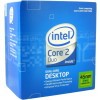
Intel Core 2 Duo E8400 3.0GHz – Wolfdale Arrives

by Rob Williams on January 30, 2008 in Processors
Intel’s 45nm Dual-Cores have finally arrived, so it’s only fitting that we take one for a spin. Our test subject is the 3.0GHz E8400, offering 6MB cache, SSE4 and more. Overclocking is impressive, with 3.8GHz stable being possible without even raising the voltage! This chip definitely proves itself a winner.
Page 3 – Testing Methodology
Regardless of the OS we are running or product being reviewed, there are a few conditions that are met to assure accurate, repeatable results.
- Desktop and scrap files are cleaned up, including emptying of recycle bin/trash.
- No virus scanner or firewall is installed.
- Internet is disabled.
- Computer has proper airflow and room temperature is 80°F or less.
- Hard-drives affected by testing are defragged using Diskeeper 10 before each fresh run.
All testing between processors is done on the same hardware. Our configuration is below:
- Processor: Intel Core 2 Duo E8400 Dual-Core 3.0GHz
- Intel Core 2 Extreme QX9770 Quad-Core 3.2GHz
- Intel Core 2 Extreme QX9650 Quad-Core 3.0GHz
- Intel Core 2 Extreme QX6850 Quad-Core 3.0GHz
- Intel Core 2 Quad Q6600 Quad-Core 2.40GHz
- Intel Core 2 Duo E6750 Dual-Core 2.66GHz
- Intel Core 2 Duo E6600 Dual-Core 2.40GHz
- Motherboard: ASUS P5E3 Deluxe WiFi-AP @n (0601 BIOS)
- Memory: OCZ 2GB Platinum DDR3-1333 (7-7-7-20, 1.9v)
- Video: ASUS 8800GTX 768MB (NVIDIA 158.22)
- Sound: Onboard HD Audio
- Storage: Seagate 7200.10 320GB x 2
- Power Supply: Corsair HX620W
- Chassis: Antec P182 Mid-Tower
- Etcetera: Windows XP Professional SP2, Windows Vista Ultimate, Gentoo 2007.0
- Cooling: Corsair Nautilus 500
- Compared Processors
For our processor reviews, we use three different operating systems: Windows XP, Windows Vista and Gentoo Linux. Although Vista has been out for close to a year, we’ve encountered numerous issues with our benchmarking, so we use it only where necessary, which at this time is only for PCMark Vantage.
- Windows XP Professional SP2
- Screensaver and all power-related options are disabled.
- All chipset/motherboard drivers are installed, in addition to GPU.
- Windows Update is called in if a specific update is needed.
- Internet is disabled.
- Windows Vista Ultimate
- Screensaver and all power-related options are disabled.
- Welcome Center is disabled.
- UAC is disabled.
- Critical Windows Updates are downloaded, including a fix for the GPU.
- Security Center is altered to never nag about the settings.
- Internet is disabled, and Aero theme is enabled.
- Gentoo 2007.0
- A minimal install of the OS is used, without a desktop environment.
- System is updated to latest stable versions. including the latest Gentoo-patched kernel.
- Internet is disabled.
No time demos are used in this review. Each level was manually played with the Minimum and Average Frames-Per-Second captured with the help of FRAPS 2.9.4. Each play-through lasts between four and six minutes. Because no time demos are used, the average FPS will vary in between runs, even on the same CPU, due to changing circumstances in the game. It’s for this reason that we play on each setting twice, then average the two. To cover the bases, both 1280×1024 and 2560×1600 resolutions are used, to see if benefits can be seen at either the low-end or high-end.
Below, you can view all of the games we will be using, as well as the settings used.
|
Specification
|
1280×1024
|
2560×1600
|
| Call of Duty 4 |   |
  |
| Crysis |   |
  |
| F.E.A.R. |   |
 |
| Half-Life 2: Episode Two |  |
 |
All other non-game benchmarks will be explained along the way.

Support our efforts! With ad revenue at an all-time low for written websites, we're relying more than ever on reader support to help us continue putting so much effort into this type of content. You can support us by becoming a Patron, or by using our Amazon shopping affiliate links listed through our articles. Thanks for your support!

Rob Williams
Rob founded Techgage in 2005 to be an 'Advocate of the consumer', focusing on fair reviews and keeping people apprised of news in the tech world. Catering to both enthusiasts and businesses alike; from desktop gaming to professional workstations, and all the supporting software.


